
Managing Pack Dynamics in Multi-Dog Households
Dogs, Multi-Dog Households, Pack Dynamics, Training Tips
Life in a Multi-Dog Household: Managing Pack Dynamics
🐾 Brought to You by Kristi's Grooming — Bothell, WA
Is your dog due for a fresh groom? Our expert team is ready to make your pup look and feel their absolute best.
Book a Grooming Session →Living with more than one dog can be deeply rewarding, but it also adds moving parts to your daily routine. With a bit of structure and a clear plan, you can keep the peace, prevent common conflicts, and help every dog in your home feel secure and understood.
Why Dogs Form Social Hierarchies at Home
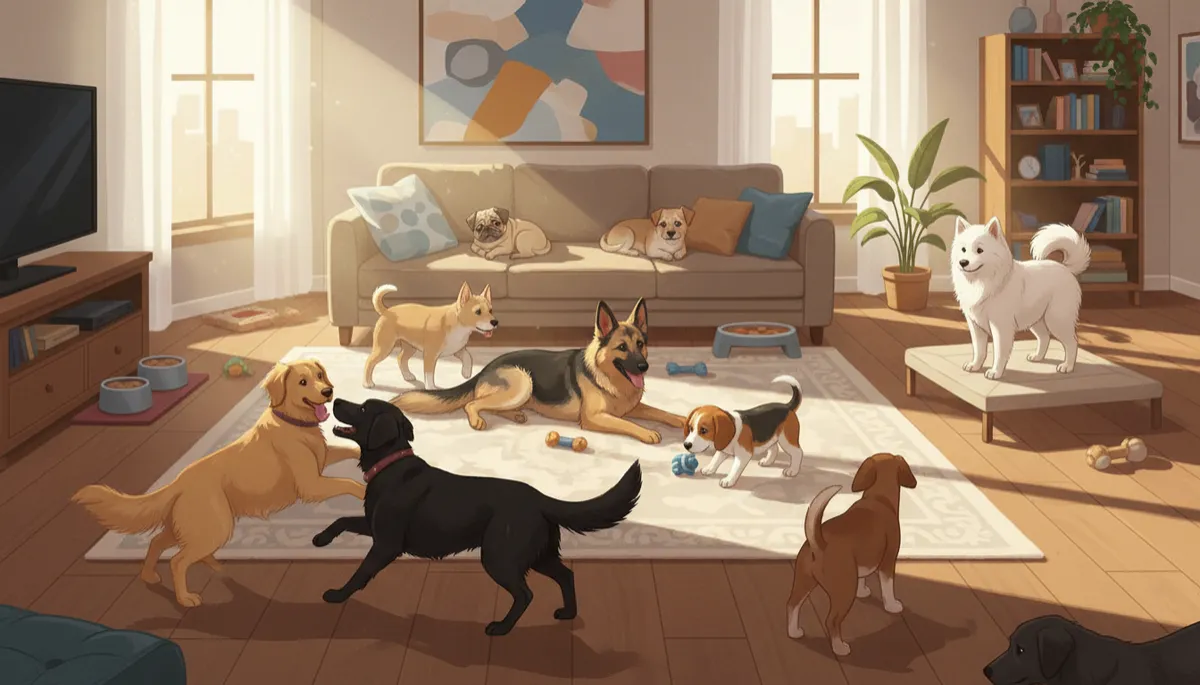
Put several dogs under one roof and they will naturally organize themselves. Dogs are social animals; clear roles and predictable routines reduce conflict. A “hierarchy” in a well-managed home is usually subtle: one dog may consistently claim the best resting spot, another may be the first to start play, while a third prefers to hang back and observe.
Your job is not to crown an “alpha,” but to be the calm decision-maker who controls resources: food, space, toys, and access to you. When humans provide structure, dogs don’t need to argue over rank. They learn that polite behavior makes good things happen, and pushy behavior doesn’t pay off.
Introducing a Second (or Third) Dog Successfully
Thoughtful introductions set the tone for the entire relationship. Start on neutral ground, like a quiet park, with both dogs on loose leashes. Walk parallel at a comfortable distance, letting them sniff the environment before each other. Watch body language: relaxed tails, soft eyes, and curved bodies are good signs; stiff postures, hard staring, or freezing mean you need more distance and time.
When you first bring the new dog home, keep things structured:
- Use leashes indoors at first if needed, so you can calmly guide and separate.
- Give the new dog its own crate or safe room to decompress.
- Supervise all early interactions; don’t assume they’ll “work it out.”
Keep the first week a little boring: short, positive interactions, then breaks. Over-excited dogs are more likely to make social mistakes.
Resource Guarding: What It Is and How to Prevent It
Resource guarding happens when a dog feels it must protect something valuable—food, toys, beds, or even you. Warning signs include stiffening, hovering over objects, hard stares, growling, or snapping when another dog approaches. In a multi-dog home, you want to prevent this from becoming a habit.
Prevention starts with clear rules: high-value items (bully sticks, raw bones, special chews) are enjoyed in separate spaces, not in a shared room. Teach each dog a solid “leave it” and “out” cue, and reward them generously for moving away when asked. If guarding is already intense, work with a qualified trainer; don’t risk a fight by “testing” them.
Feeding Strategies for Multiple Dogs
The simplest way to avoid mealtime drama is to remove the opportunity for it. Feed dogs in separate zones: crates, gated rooms, or opposite corners with enough distance that bowls are not within easy reach of each other. Pick up bowls as soon as each dog finishes; no “free grazing” if you have a food-stealer in the house.
For dogs on different diets or with different speeds of eating, slow feeders and clear routines help. Ask for a simple cue—like “sit” and “wait”—before you put bowls down. Releasing them with their names reinforces that each dog eats from its own bowl and that you, not they, control when food appears.
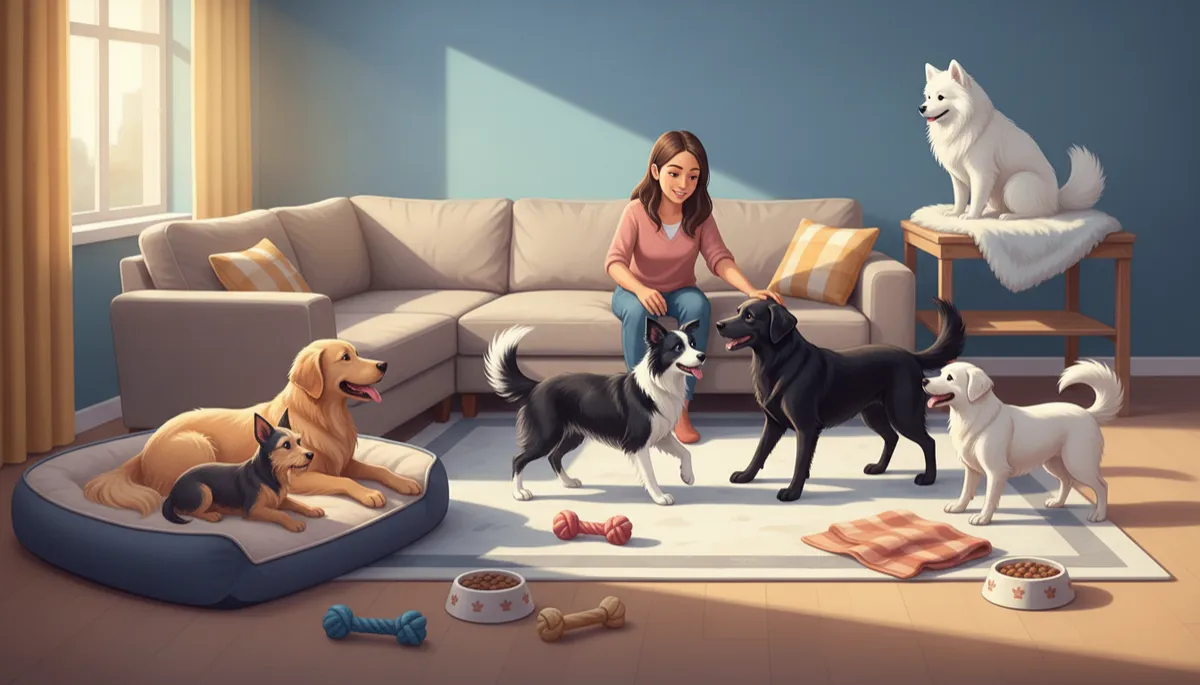
Structured, separated mealtimes prevent conflict and make feeding time predictable and peaceful.
Managing Jealousy and Attention-Seeking
When one dog climbs into your lap and another wedges between you, that’s not “cute rivalry”—it’s competition. If you reward pushy behavior with petting, you teach dogs to shove each other for access to you. Instead, set a simple rule: only calm, polite dogs get attention.
Ask all dogs for an easy cue like “sit” or “down” before you start touching anyone. If one dog barges in, calmly remove your hands, wait for everyone to settle, then resume. Over time, they learn that waiting quietly works better than elbowing siblings out of the way. If a dog is especially clingy, build their confidence with training games and independent activities like food puzzles.
The Importance of One-on-One Time with Each Dog
In multi-dog homes, it’s easy for quieter dogs to fade into the background and for louder personalities to dominate your time. Individual sessions—short walks, training, or cuddle time—let you really see each dog and work on their specific needs. They also teach dogs that they can cope being apart from the group, which reduces anxiety and over-attachment between dogs.
Crating and Sleeping Arrangements
Crates are not punishments; they’re bedrooms. In a multi-dog household, crates and defined sleeping spots are invaluable for preventing late-night scuffles and giving everyone true downtime. Each dog should have its own designated space, whether that’s a crate, bed, or mat. Avoid forcing dogs to share a sleeping area, even if they choose to pile together sometimes.
At night or when you’re away, separate dogs according to what keeps the household calmest. Some pairs rest best together; others do better with a door or gate between them. Pay attention to quality of sleep—rested dogs are less irritable and more tolerant during the day.
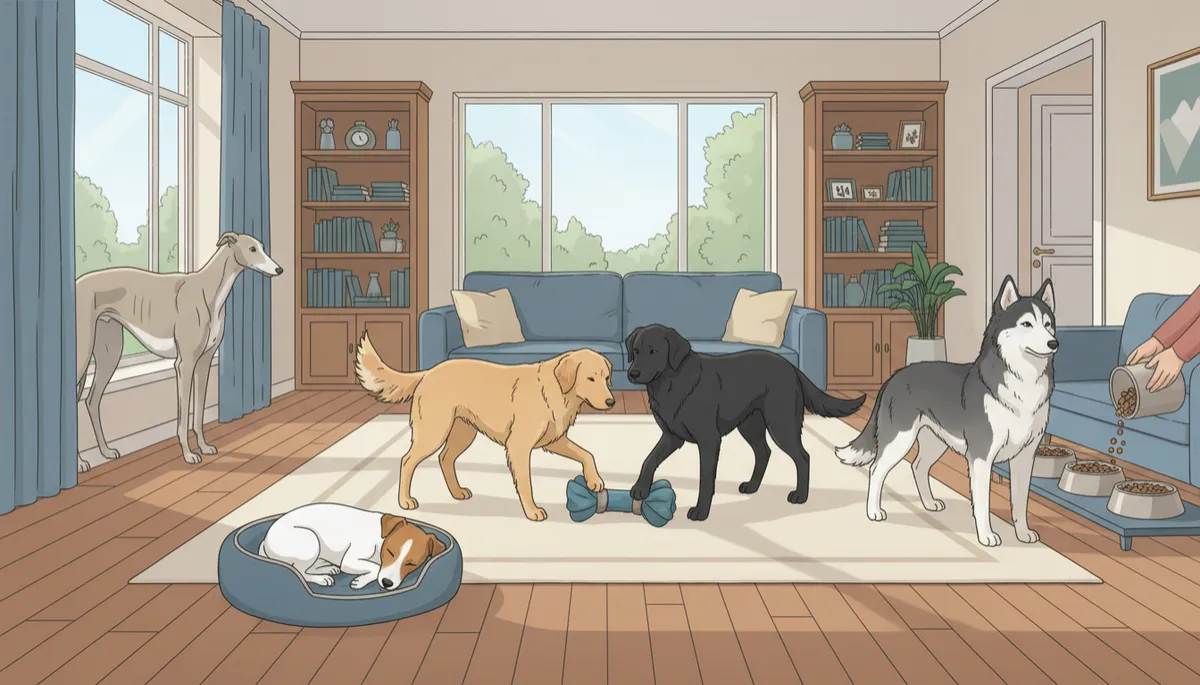
Clear, individual sleeping spaces reduce tension and help dogs fully relax and recharge.
Dog–Dog Play and When to Intervene
Play is how many dogs bond, practice social skills, and burn energy. Good play is loose and bouncy, with role reversals—one dog chases, then they swap. You’ll see play bows, pauses, and self-handicapping (the stronger dog easing up). Voices may sound loud, but the bodies stay relaxed.
Step in if you see one dog constantly pinning another, if a dog is trying to escape and can’t, or if arousal is climbing—movement gets faster, bodies stiffen, and breaks disappear. Use cheerful interruption cues like “okay, break,” then call dogs apart and reward them for checking in with you. Short, managed play sessions beat hours of unsupervised chaos.
Maintaining Long-Term Harmony in a Multi-Dog Home
Harmony isn’t a one-time achievement; it’s something you maintain with routines and clear expectations. Keep household rules consistent: same mealtime structure, same boundaries about furniture, same response to pushy behavior. Periodically revisit training basics with each dog so cues stay sharp and they remember to look to you for guidance.
As dogs age or new dogs join, dynamics will shift. A senior may become less tolerant of rough play; a confident adolescent may start testing limits. Don’t ignore these changes. Adjust exercise, management, and veterinary care as needed, and bring in a professional trainer early if tension rises. With steady leadership, thoughtful management, and respect for each dog’s needs, a multi-dog household can run smoothly for years.
🐶 Ready to Book a Grooming Session?
At Kristi's Grooming in Bothell, WA, every dog gets the royal treatment. From baths and trims to full breed-specific styling — we've got your pup covered. Spots fill up fast, so don't wait!
Schedule Your Appointment Today →📍 Kristi's Grooming • Bothell, WA • kristisgrooming.net
